



I had a staring contest with a slice of carrot the other day. Eye to eye, we sat there, and something clicked.
A prepared dish is like a symphony. Each vegetable a different instrument: some loud, some quiet, some surprising, some uncomfortable, awkward, dazzling. Each one has its own beauty, and when played together, it creates this masterful thing that hits every sense at once. The rainbow of colors and textures. The potent perfume-like smells. The crackling in the pot. The sound of the perfect crunch. And of course, those delectable, tantalizing bites.
Food, like music, has this impeccable way of bringing us together. Community is formed on a dance floor and at a dinner table. Genres are cuisines. We may not love every piece of music in a genre, but we can likely find one song in each that feels “right” in our system, just like the star dish of a cuisine.
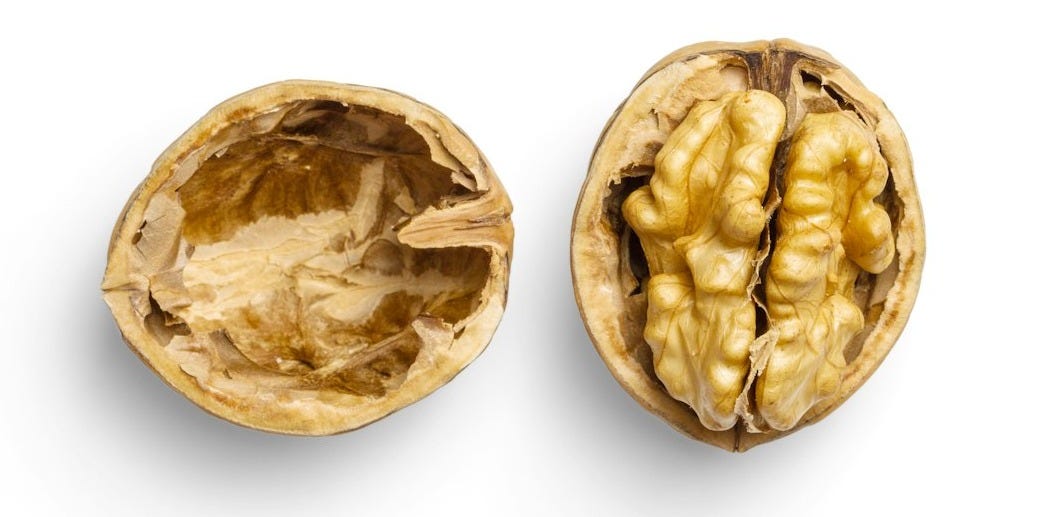
A teacher once told me about the doctrine of signatures, this ancient concept that vegetables have visual signatures indicating how they can support our bodies. Carrots look like eyes and are rich in vitamin A for vision. Walnuts resemble the brain and contain omega-3 fatty acids for cognitive function. Our ancestors knew something we’ve forgotten: the body speaks a language older than words.
Just like music and vibrations inevitably impact us (our bodies made of mostly water, just try playing a loud speaker near a glass), sound travels out through vibrations from our vocal cords. When we hum, sing, chant, or moan, these vibrations stimulate our vagus nerve, activating our parasympathetic nervous system and helping us shift into a calmer state. Similarly, we can mindfully, slowly eat to engage this same relaxation response.
Sex, like eating, like music, is synesthesia. It’s every sense firing at once: sound layered over touch, scent mingling with taste, sight blurring into sensation. When one sense awakens, it pulls the others with it. This is why a certain song can make your skin ache, why the right lighting changes everything, why taste and smell can transport you instantly back to desire you’d forgotten you had.
Whether we’re eating, listening to music, or experiencing sexual pleasure, our bodies respond to the same principle, we have to get out of our heads and into sensation. We have to be present enough to actually feel.
So why am I talking about all of this?
Because the senses are a crucial component when talking about sex.
If you aren’t considering this as a real thing, you’re definitely missing out on the potential for a symphony in the bedroom.
If you’re having a hard time letting go, surrendering, being present, being in your body, making space for pleasure, here is a key: we can’t force pleasure or enjoyment, we can only create the space for it. We have to slow down enough to hear the quiet symphony. We have to clear the stage so the instruments can play. Clear the table of all the to-dos of the day so a stunning culinary work of art can be presented.
And here’s what makes sex different from every other sensory experience: our genitals are exquisitely designed for this. To be clear this is hardly an afterthought or a reproductive necessity with pleasure as a bonus, but rather they are pleasure-generating instruments in their own right.
Our bodies are literally designed for pleasure. The clitoris is the only organ in the human body that exists solely for pleasure, with over 10,000 nerve endings concentrated in this small area. The penis, particularly the glans (head) and frenulum, is densely innervated with thousands of nerve endings that make it a primary source of sexual pleasure and sensation. These structures can be activated without any reproductive function at all, they exist to feel good.
But here’s the thing: we have to learn what makes us tick. What’s a sensual easy win versus one that makes us want to crawl out of our skin?
Understanding our relationship to our senses is an essential piece of understanding how to be in our bodies, and eventually, how to have the best sex we’ve ever had.
Announcing: Pleasure Mapping
I’ve been working on something for months, and I’m finally ready to share it with you.
Pleasure Mapping is a 5-week virtual sensory series that starts March 24th: intentionally timed with the spring equinox, a time of planting seeds for new beginnings. This is the work I wish someone had given me years ago, before I spent so much time overriding what my body was trying to tell me, before I learned the hard way that great sex isn’t about technique, it’s about presence.
Here’s what we’re doing differently: we’re not starting in the bedroom. We’re starting with understanding how your desire actually works, what accelerates you, what shuts you down, and how to listen to your body without pressure or performance.
Over five weeks, meeting online, we’ll map your unique pleasure landscape. Not what you think you should like. Not what worked for your last partner. What actually makes your nervous system sing.
You’re welcome to attend solo or with a partner. If you choose, you’ll be paired with a buddy for deeper exploration and accountability between sessions. Participation is always invitational, listening is a valid form of engagement.
The Curriculum:
Week 1 — Foundations: Self-Attunement & Choice
You learn how your desire actually works and how to listen without pressure.
Week 2 — Sight & Sound: Designing Your Dream “Sex Room”
You explore what your body responds to visually and aurally, and how environment shapes desire.
Week 3 — Taste & Smell: Memory, Emotion & the Body
You access pleasure through memory, association, and the senses that bypass logic.
Week 4 — Touch: Communication, Attunement & Curiosity
You practice asking for what you want, receiving touch with choice, and exploring curiosity together.
Week 5 — Integration: From Knowing to Saying
You translate insight into real conversations using tools like RBDSM, a practical framework for self-advocacy and clarity in intimacy.
By the end of this series, you’ll:
Recognize what genuinely opens you and what quietly shuts you down
Understand your pleasure preferences across the senses
Develop language for needs, desires, and limits
Communicate with partners without collapsing, over-explaining, or bracing
Feel confident asking for exactly what you want in the bedroom (and everywhere else)
This isn’t just about having better sex, though that’s definitely on the table. This is about reclaiming your relationship with pleasure as a birthright, not a luxury. It’s about learning to trust what your body has been trying to tell you all along.
What’s Included:
5 live weekly sessions with teaching and embodiment practices
All lectures recorded (yours to revisit)
Optional breakout spaces for reflection and conversation
Pleasure Mapping digital workbook
Private WhatsApp group for connection and shared resources
Optional buddy pairing for deeper exploration between sessions
The Details:
Starts March 24th, 2026
Virtual
Open to individuals and couples
Pricing:
Early Registration (through February 15th): $90
Standard Registration: $111
Late Registration: $130
Paid subscribers of Letters from the Body receive 15% off
Series + Integration ($290) includes everything above plus:
One 90-minute private 1:1 integration session
Personalized reflection on your Pleasure Map
Custom practices tailored to your nervous system, patterns, and desires
If you’ve been waiting for permission to prioritize your pleasure, to stop performing and start feeling, this is it.
The carrot and I finished our staring contest. I blinked first. But I learned something: my body has always known what it wants. I just needed to slow down enough to listen.
I hope you’ll join me in learning to listen to yours.